GEOTECHNICAL ENGINEERING
STOKE-ON-TRENT
HomeInvestigationCPT (Cone Penetration Test)

Cone Penetration Testing (CPT) in Stoke-on-Trent

Practical geotechnics, field-tested.

LEARN MORE

With a population approaching 260,000 and sitting on the historic coalfield of North Staffordshire, Stoke-on-Trent presents a unique set of challenges for anyone building on its ground. The city's industrial legacy has left a patchwork of backfilled marl pits, colliery spoil, and drift deposits that standard boreholes sometimes struggle to characterise fully. Our team runs cone penetration tests across the six towns — from Tunstall to Longton — because the continuous profile it provides is invaluable for spotting thin coal seams, ash layers, and variable alluvium over the Etruria Formation mudstones. For developers breaking ground in Hanley or Fenton, pairing a CPT campaign with targeted test pits is often the smartest way to map out the fill thickness before committing to foundation design.

Continuous CPT profiling reveals thin coal seams and backfilled pits that a borehole every 20 metres can completely miss — critical in Stoke-on-Trent's mining landscape.
Our service areas

Methodology and scope

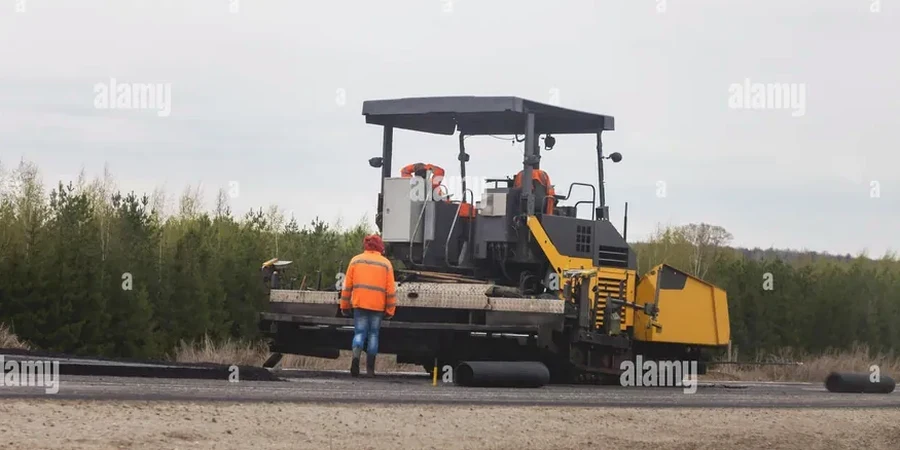
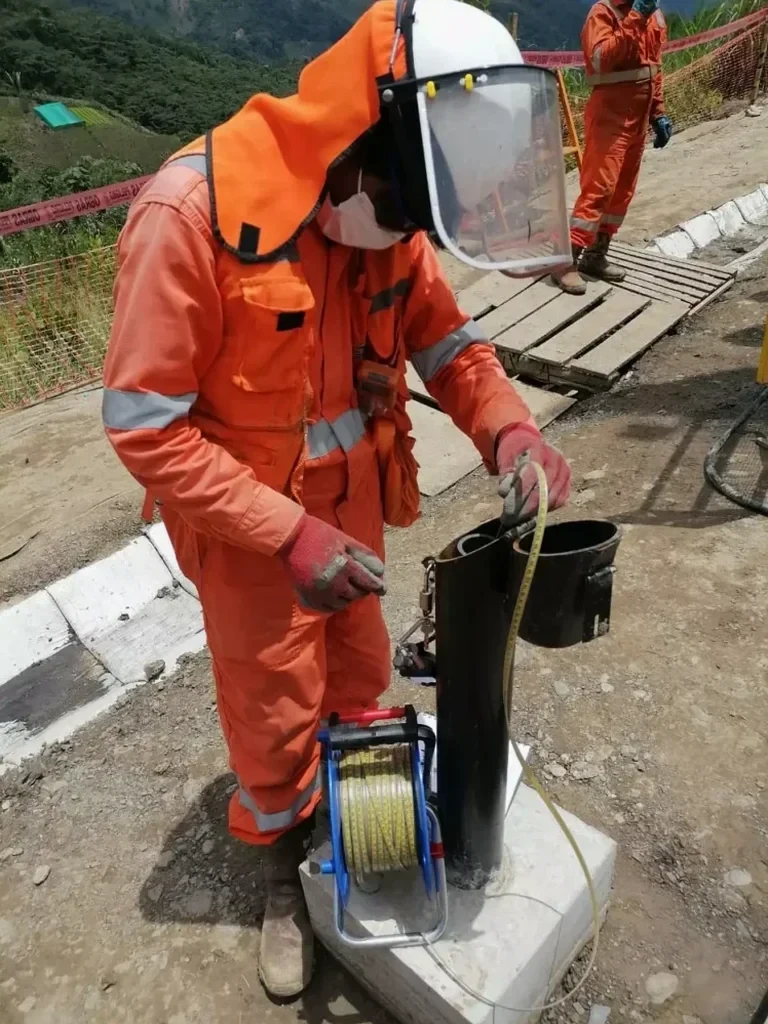
The rig we deploy around Stoke-on-Trent is a 20-tonne tracked unit with a 200 kN penetration capacity, which handles the stiff glacial tills and weathered mudstone crust typical of the area without skipping a beat. A 60-degree cone with a 15 cm² base area feeds pore pressure, tip resistance, and sleeve friction data up the string in real time — and the pore pressure dissipation tests we can run at selected depths tell us a lot about the consolidation characteristics of the alluvial silts along the River Trent floodplain. When the profile shows an abrupt jump in friction ratio, we often recommend following up with grain size analysis on a thin-walled sample from an adjacent borehole to confirm whether we are dealing with a coal seam, a limestone band, or an old tip fill. It is that cross-checking with lab data that turns a good investigation into a defensible one for a building control submission.
Cone Penetration Testing (CPT) in Stoke-on-Trent
Technical reference — Stoke-on-Trent

Local geotechnical context

A dry summer in Stoke-on-Trent firms up the surface clays and makes rig access across greenfield sites straightforward, but a wet autumn transforms the same ground into a slippery challenge that demands timber matting and careful site management. The bigger risk, though, is unseen: undocumented mine entries and bell pits riddle the area, and a CPT refusal at shallow depth without context might be misinterpreted as bedrock when it is actually a capstone over a void. Our engineers cross-reference refusal depths with the Coal Authority's mining reports as a matter of routine, and when the cone stops dead on a suspected old working, we recommend immediate grouting investigation to assess the extent before anyone puts a shovel in the dirt.

Need a geotechnical assessment?

Reply within 24h.

Email: contact@geotechnical-engineering.biz

Video resource

Reference standards

BS 5930:2015 + A1:2020, BS EN ISO 22476-1:2012, Eurocode 7 (BS EN 1997-1:2004), Coal Authority consultation (mining reports)

Technical data

ParameterTypical value
Cone capacity200 kN (standard), higher on request
Cone typePiezocone (u2) with 15 cm² base
Measured parametersqc, fs, u2, inclination
Maximum depthUp to 30 m in competent ground
Rate of penetration20 mm/s ± 5 mm/s per BS EN ISO 22476-1
SamplingContinuous digital log; spot U100 with adjacent rig
Reporting standardBS 5930:2015 + A1:2020, Eurocode 7

Frequently asked questions

How much does a CPT investigation cost in Stoke-on-Trent?

For sites around the Potteries, you can expect to budget from £130 to £200 per metre of penetration, depending on access conditions, the number of soundings, and whether pore pressure dissipation testing is required. A typical day's work with mobilisation usually falls in the range of £1,200 to £1,800 + VAT. Ground conditions that demand timber matting or specialist traffic management in the built-up parts of Hanley can push costs toward the upper end.

Can the CPT rig detect old coal mine workings beneath my site?

The cone itself does not see an open void — it will refuse on a solid obstruction or punch through a thin cap into softer fill. What it does exceptionally well is map the stiffness contrast around a collapsed working. When our report notes an abrupt drop in tip resistance at a depth that lines up with known seam levels on the Coal Authority plan, that is a strong indicator you should investigate further with rotary drilling or geophysics.

What depth can a CPT reach in the Etruria Marl?

In the weathered Etruria Marl that underlies much of Stoke-on-Trent, our 200 kN rig typically reaches between 8 and 14 metres before hitting refusal on the unweathered mudstone. In the river gravels and softer alluvium of the Trent floodplain, we can often push to 20 or 25 metres without difficulty. We always plan for a minimum target depth but let the ground dictate the final refusal point.

Location and service area

We serve projects across Stoke-on-Trent and its metropolitan area.

View larger map