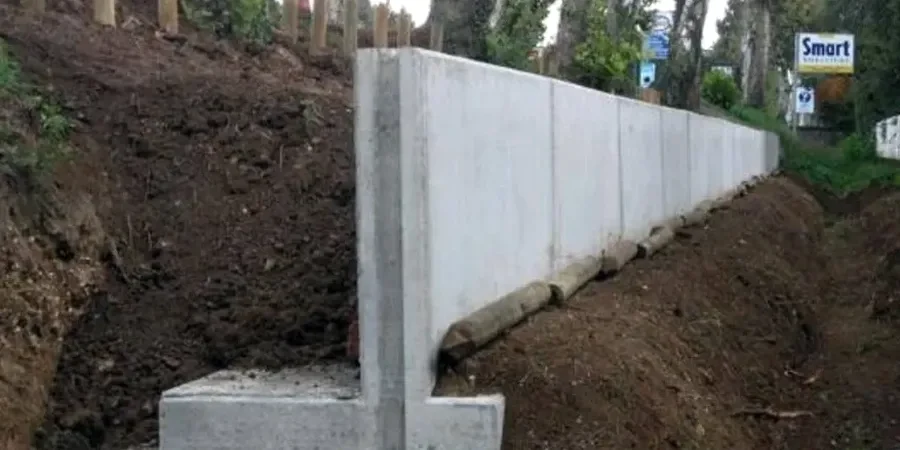
Slopes and walls represent a critical discipline within geotechnical engineering, focused on the stability of natural and man-made earth structures. In Stoke-on-Trent, a city carved by its industrial past and distinctive topography, the integrity of retaining structures and excavated or natural slopes is paramount. This category encompasses the analysis, design, and remediation of any near-vertical or inclined ground surface, from a deep railway cutting to a garden retaining wall supporting a highway. The core objective is to manage lateral earth pressures and prevent ground movement that could threaten property, infrastructure, and life.
The geological context of Stoke-on-Trent makes this expertise particularly vital. The city is underlain by the Carboniferous Coal Measures, a sequence of interbedded sandstones, siltstones, mudstones, and historically important coal seams. These strata are often weathered near the surface, creating a mantle of variable, sometimes unstable, glacial till and head deposits. The legacy of extensive mining and brickmaking has left a landscape riddled with old marl pits, spoil heaps, and backfilled quarries. These man-made deposits can be highly heterogeneous and prone to settlement or collapse, demanding rigorous slope stability assessments for any new development on or adjacent to them.
All design and construction work in this category must adhere to the robust framework of UK practice, primarily Eurocode 7: Geotechnical design (BS EN 1997-1 and -2) and its UK National Annex. This is complemented by BS 8002:2015, the code of practice for earth retaining structures, and BS 6031 for earthworks on highways. For projects involving former mining land, the specific requirements of the Coal Authority are a legal necessity. A thorough ground investigation, as specified in BS 5930, is the non-negotiable starting point, feeding into the geotechnical design model that underpins the choice of wall type, the slope angle, and the need for reinforcement or drainage.
The applications for slope and wall engineering in the Potteries are diverse. They range from designing permanent active and passive anchor systems to stabilise a deep basement excavation in Hanley, to constructing new cantilever or embedded retaining walls for a residential development on a sloping site in Penkhull. Other typical projects include the remediation of a failing highway cutting slope, the design of reinforced soil walls for bridge abutments, or assessing the risk of a landslide onto an existing structure. Each project requires a bespoke solution that considers not just the ground, but also surface water drainage, which is often the single biggest factor in slope failure in the UK's wet climate.
A slope stability problem typically involves assessing an existing, unreinforced earth mass to determine its factor of safety against a deep-seated or shallow landslide. A retaining wall design problem is about engineering a structure to create a stable change in ground level, where the wall itself is designed to resist the lateral thrust of the retained soil or rock fill.
The area's complex geology of Coal Measures, glacial till, and extensive made ground from mining and pottery industries is highly variable. A ground investigation to BS 5930 is the only way to reliably determine soil strength, groundwater levels, and the presence of voids or contaminated materials, which are critical parameters for safe and economical design.
The primary standard is Eurocode 7 (BS EN 1997-1) with its UK National Annex, which establishes the limit state design philosophy. This is directly supported by BS 8002:2015, the specific code of practice for earth retaining structures, providing detailed guidance on everything from earth pressures to drainage and the selection of wall types.
Drainage is arguably the single most critical factor. A build-up of water behind a wall or within a slope dramatically increases pore water pressure, reducing effective stress and therefore soil strength. Almost all failures are related to water. A robust drainage system, designed in accordance with BS 8002, is essential to relieve this pressure and ensure long-term stability.
We serve projects in Stoke-on-Trent and surrounding areas. More info.