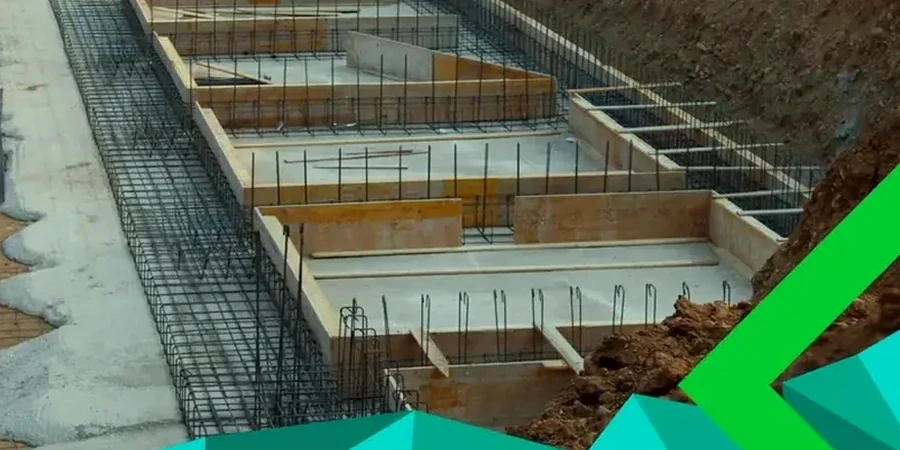
Foundation engineering in Stoke-on-Trent is far more than simply placing concrete in the ground; it is a critical discipline that directly responds to the city's complex industrial legacy. The Potteries' history of extensive coal mining, clay extraction for ceramics, and ironstone working has left a subsurface riddled with abandoned mine workings, variable made ground, and backfilled marl pits. A robust foundation strategy is therefore essential to manage the significant geotechnical risks, ensuring that any new structure, from a residential extension to a commercial development, is safely supported and protected against long-term ground movement and subsidence.
The local geology is dominated by the Middle and Upper Coal Measures, comprising interbedded sandstones, siltstones, and mudstones, overlain by glacial till and extensive areas of artificial ground. This creates a highly variable bearing stratum. Competent sandstone can be found at depth, but it is often overlain by weak, compressible clays or uncompacted fill. The presence of shallow mine entries and uncharted workings, particularly from the 18th and 19th centuries, presents a constant hazard. A thorough desk study and ground investigation, in line with British Standards, is not just a recommendation but a fundamental necessity to characterise these challenging conditions before any foundation design can commence.
All foundation work in Stoke-on-Trent is governed by the national regulatory framework. Compliance with Building Regulations Approved Document A (Structure) is mandatory, which references the core technical standard for geotechnical design: Eurocode 7 (BS EN 1997-1 and -2) and its UK National Annex. The execution of specialist geotechnical works, particularly piling, must adhere to the Institution of Civil Engineers' Specification for Piling and Embedded Retaining Walls (SPERWall). Furthermore, given the coal mining legacy, a Coal Mining Risk Assessment is frequently required by the planning authority, often necessitating intrusive site investigations to satisfy the conditions set by the Coal Authority. Designs must demonstrate how they mitigate these risks to achieve the required factors of safety.
The selection of an appropriate foundation solution is dictated by ground conditions, structural loads, and site constraints. For lightly loaded structures on competent natural ground, traditional shallow foundation design using strip or pad footings may prove adequate and cost-effective. However, where near-surface soils are weak or fill is deep, deeper solutions become necessary. Pile foundation design is the standard approach to bypass problematic strata, transferring loads to a competent bearing layer at depth, and is often mandatory in areas of known historical mining. For structures with heavy column loads or where differential settlement must be strictly controlled, particularly on variable ground, a raft/mat foundation design provides a stiff, combined footing that bridges localised soft spots and reduces overall settlement.
Stoke-on-Trent's unique industrial history of deep coal and clay mining has created widespread subsurface hazards, including uncharted mine workings and variable artificial ground, which pose significant subsidence risks not typically found in other areas. A specialist design is essential to interpret a mandatory Coal Mining Risk Assessment and engineer a solution that safely mitigates these ground instability threats.
Foundation design is governed by Building Regulations Approved Document A, which requires compliance with Eurocode 7 (BS EN 1997-1 and -2) and its UK National Annex. For piling works, the ICE Specification for Piling and Embedded Retaining Walls (SPERWall) is the key execution standard, ensuring geotechnical designs meet strict safety and performance criteria.
A ground investigation is critical for determining the depth and strength of bearing strata, the presence of groundwater, and any geotechnical hazards. The findings directly dictate the foundation strategy: competent shallow soils may suit footings, while deep, weak, or contaminated made ground will almost certainly require a piled solution to transfer loads to stable rock.
A traditional strip footing is a linear support beneath load-bearing walls, suitable for good, uniform ground. A raft foundation is a large, continuous reinforced concrete slab covering the entire building footprint, designed to spread heavy loads and bridge areas of weaker ground, making it ideal for sites with moderate, variable soil conditions or where differential settlement must be minimised.
We serve projects in Stoke-on-Trent and surrounding areas. More info.