Practical geotechnics, field-tested.
LEARN MOREIn-situ testing represents a fundamental pillar of modern geotechnical engineering, encompassing a suite of field-based investigative techniques designed to evaluate the physical, mechanical, and hydraulic properties of soils and rocks directly within their natural environment. In Stoke-on-Trent, a city whose industrial heritage and ongoing regeneration are deeply intertwined with its underlying geology, these tests are not merely a procedural step but a critical necessity. The category covers a broad spectrum of methods, from assessing the compacted density of engineered fills to determining the load-bearing capacity of foundation strata and measuring the permeability of the ground. For a city built on a complex legacy of coal mining, pottery marl pits, and variable drift deposits, the ability to obtain accurate, undisturbed ground data is paramount to ensuring the safety and longevity of any construction or remediation project.
The geological context of Stoke-on-Trent presents a uniquely challenging environment that makes in-situ testing indispensable. The city is underlain by the Middle and Upper Coal Measures of the Pennine Coal Measures Group, a Carboniferous sequence of interbedded sandstones, siltstones, mudstones, and historically valuable coal seams. This solid geology is extensively masked by a cap of glacial till, glaciofluvial sands and gravels, and pockets of alluvium along the River Trent and its tributaries. Crucially, the area is riddled with unmapped historical mine workings, abandoned shafts, and backfilled marl pits from the pottery industry. These artificial features create a high risk of voiding, differential settlement, and contaminated land. Consequently, laboratory tests on disturbed samples are often insufficient; direct field assessments, such as a plate load test (PLT), are vital for confirming the true stiffness and ultimate bearing capacity of heterogenous ground that cannot be reliably modelled in a lab.
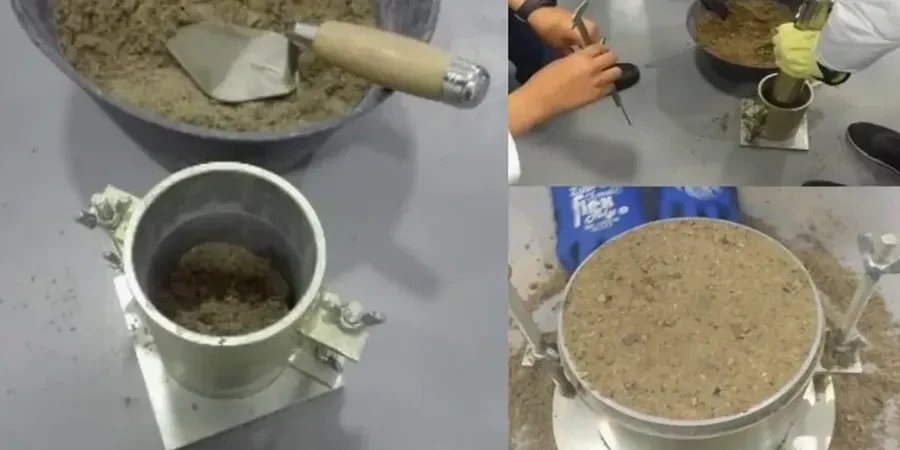
The application of in-situ testing in the UK, and Stoke-on-Trent specifically, is governed by a rigorous framework of standards and regulations to ensure data quality and structural safety. The primary reference is the British Standard BS 5930:2015+A1:2020, the code of practice for ground investigations, which provides detailed guidance on the selection and execution of field tests. This is complemented by BS 1377 for soils and BS EN ISO 22475-1 for sampling and groundwater measurements. For projects on or near former mining land, compliance with the Coal Authority's permitting and treatment requirements is mandatory, often necessitating specific intrusive investigations. The robust nature of these norms means that a field density test (sand cone method) must be performed with meticulous adherence to procedures for compaction verification, serving as the definitive proof for regulatory sign-off on earthworks for highways, embankments, and residential platforms.
The types of projects in Stoke-on-Trent that demand a comprehensive in-situ testing programme are diverse and closely tied to the city's landscape. Large-scale brownfield regeneration schemes, such as the transformation of the former Spode pottery works or the Etruria Valley development, require detailed permeability assessments to manage groundwater and gas migration, often employing a field permeability test (Lefranc/Lugeon) to design effective drainage and venting systems. Similarly, the construction of new logistics hubs along the A500 corridor relies on plate load tests to validate foundation designs on variable made ground. Infrastructure projects, including flood defence works along the Trent, road widening schemes, and the installation of sustainable drainage systems (SuDS), all depend on accurate in-situ density and strength parameters to prevent future failures. From verifying the integrity of a remediated mine shaft cap to ensuring the stability of a new school's playing fields, field testing provides the empirical evidence that desk studies and borehole logs alone cannot.
In-situ testing evaluates soil and rock properties directly in the ground without the disturbance caused by sampling, transportation, and preparation. This preserves the natural stress state, structure, and moisture content, providing a more representative measurement of mass permeability, in-place density, and deformation modulus. It is essential for profiling heterogeneous ground conditions, like the variable fills and glacial deposits common in Stoke-on-Trent, where obtaining a truly undisturbed sample is technically impossible.
For former coal mining sites, a combination of techniques is typically required. A plate load test is crucial for determining the bearing capacity and settlement characteristics of shallow foundations over potentially voided or collapsed ground. Field density tests verify the adequacy of compaction for any engineered cap or platform. Additionally, while not structural, in-situ permeability testing using the Lefranc or Lugeon method is vital for understanding groundwater flow paths that could be altered by old mine workings, affecting water quality and ground stability.
BS 5930:2015+A1:2020 is the definitive UK code of practice for ground investigations. It guides the entire process, from the initial desk study and the selection of appropriate in-situ test methods based on anticipated ground conditions, to specifying the required number of test points and the procedures for execution. The standard ensures that the testing programme is systematic, targeted at the geotechnical risks identified for a project in Stoke-on-Trent, and produces verifiable data that can be confidently used for design.
Field permeability testing, such as the Lefranc test, directly measures the infiltration rate of the soil in its natural state. This is critical for SuDS design because laboratory tests on disturbed samples cannot replicate the in-situ effects of soil fabric, fissures, and layering found in Stoke-on-Trent's glacial tills and made ground. An accurate field hydraulic conductivity value is essential to correctly size infiltration basins and swales, ensuring they function effectively without causing waterlogging or instability, and to comply with local planning authority requirements for surface water management.
We serve projects in Stoke-on-Trent and surrounding areas. More info.