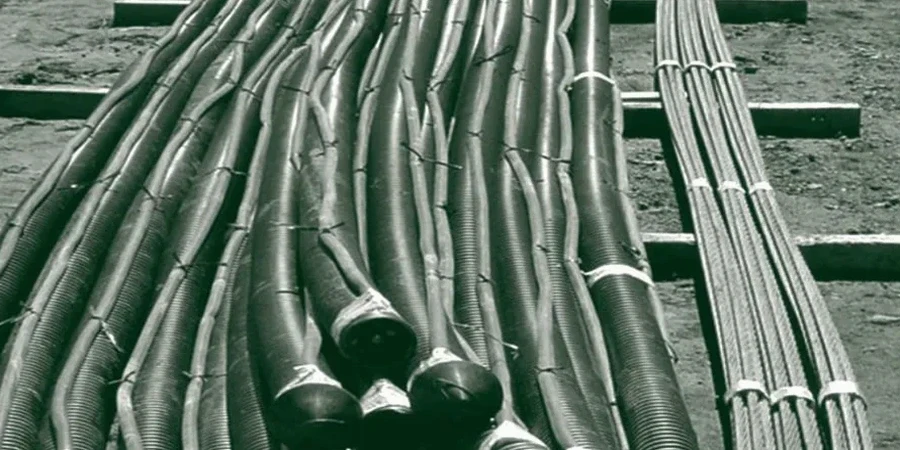
The first thing that arrives on site for an anchor installation in Stoke-on-Trent is a compact but powerful hydraulic rotary-percussive rig, often mounted on tracks to handle the sloping, post-industrial terrain common across the six towns. The rig positions itself over the marked borehole location, and the driller starts advancing the casing through the upper layers of made ground and glacial till that blanket much of the city, before reaching the competent Coal Measures bedrock. It is a methodical process of flushing, drilling, and monitoring the return water for signs of voids or old mine workings, which can appear without warning in this part of North Staffordshire. Once the design depth is reached, the tendon is inserted and the grouting begins, creating a bond that will either actively tension the structure or passively reinforce the ground mass, depending on what the geotechnical model demands.
A ground anchor in Stoke-on-Trent must be designed as much for what you cannot see, the old shafts and variable fill, as for the loads you can calculate.