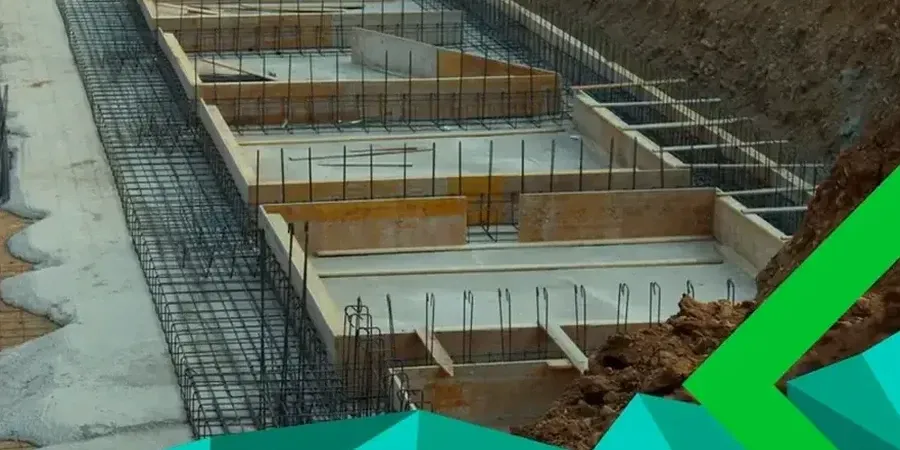
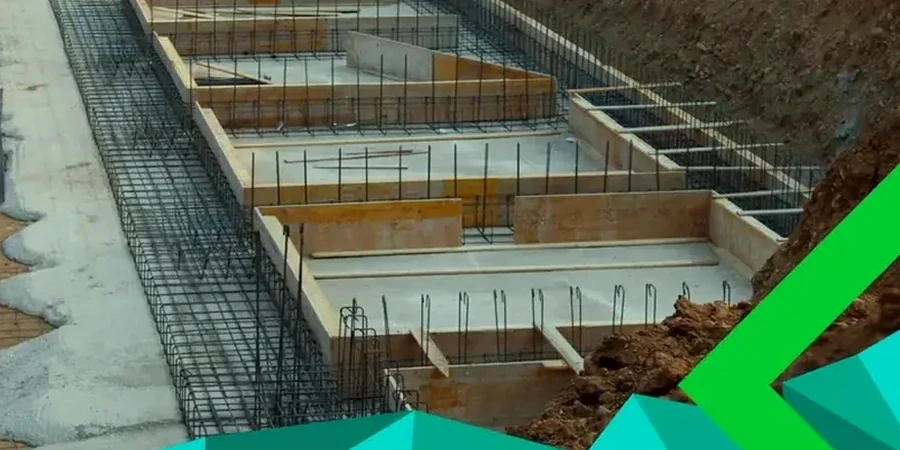
GEOTECHNICAL ENGINEERING
STOKE-ON-TRENT
HomeFoundationsShallow foundation design

Shallow Foundation Design in Stoke-on-Trent: Bearing Capacity on Glacial Till

Practical geotechnics, field-tested.

LEARN MORE

A three-storey residential block on Leek Road stopped dead for six weeks. The culprit? A pocket of soft made ground that the desk study missed. In Stoke-on-Trent you never excavate blind. The drift geology map shows Devensian till draped over Mercia Mudstone, but the reality on site is often a mosaic of marl, sand lenses and—critically—centuries of pottery waste backfill. We design shallow foundations that work with this patchy ground. A single borehole to 6 m logged by a geotechnical engineer tells us more than a dozen window samples logged from a pickup. Once we know what we are sitting on, we apply BS EN 1997-1 Design Approach 1 to size the footing so settlement stays within the 25 mm serviceability limit the local building control officer will ask for. For sites near the Trent floodplain, we often run a CPT test to get continuous tip resistance and friction ratio profiles through the alluvial clays before selecting the final bearing stratum.

In the Potteries, the biggest threat to a shallow foundation is not the natural ground—it is the 200-year archive of buried bottle ovens and brick rubble.

Our service areas

Methodology and scope

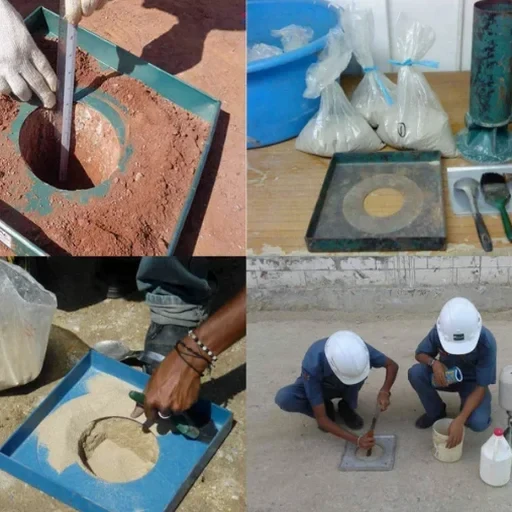
Stoke-on-Trent sits at roughly 120 m AOD on the western flank of the Pennines. Average rainfall exceeds 800 mm/year, and the upper 2 m of the natural profile in the Potteries is rarely uniform. Our shallow foundation design accounts for three recurrent conditions: stiff reddish-brown till with cobbles, weathered mudstone with desiccation cracks, and uncontrolled fill from brick and china clay waste. We strip the weathered crust as a minimum and seat pad footings on competent material with a presumptive bearing capacity verified by in-situ plate load tests or SPT N-values. Where the fill thickness exceeds 1.5 m, a raft becomes the more cost-effective option—we model it as a rigid plate on Winkler springs calibrated to the subgrade reaction modulus from site tests. The key number we chase on every project is differential settlement: we keep it below half the total settlement limit, usually 1/500 of the bay spacing for framed structures, because that is what cracks the partitions and jams the doors. In the northern wards like Tunstall, where the till is thinner and sandstone bedrock is shallow, pad foundations bearing directly on rock can be designed using the unconfined compressive strength from rock cores, applying a factor of safety of 3 as required by BS 8004.
Shallow Foundation Design in Stoke-on-Trent: Bearing Capacity on Glacial Till
Technical reference — Stoke-on-Trent

Local geotechnical context

The classic mistake in Stoke-on-Trent? Treating the stiff clay crust as representative of the entire bearing stratum. The crust can be 1.5 m thick, dry and heavily overconsolidated—it feels like concrete on the excavator bucket. The contractor opens a trial pit, spots the hard clay, and calls it good. But below that crust, the till often grades into a softer, wetter matrix with cobbles, or transitions into weathered mudstone with open joints. We have seen pad footings sized on a presumptive 200 kPa bearing capacity punch through the crust and settle 40 mm within six months of backfill because the underlying material was only good for 80 kPa. Another risk specific to the city is differential settlement across the footprint where half the building is on natural till and half is on reworked pottery waste. We mitigate this by extending the site investigation deeper than the zone of influence—typically 1.5 times the smallest foundation width below the bearing level—and by specifying geotextile-reinforced granular layers beneath rafts to bridge soft spots. The Coal Authority mining report is mandatory reading; we cross-check shallow mine workings within 30 m of the surface against the proposed bearing elevation before signing off.

Need a geotechnical assessment?

Reply within 24h.

Email: info@geotechnical-engineering.biz

Reference standards

BS EN 1997-1:2004+A1:2013 (Eurocode 7: Geotechnical design), BS 8004:2015 (Code of practice for foundations), BS 5930:2015+A1:2020 (Code of practice for ground investigations), BS 8102:2022 (Protection of below ground structures against water ingress)

Technical data

ParameterTypical value
Maximum allowable total settlement25 mm (residential), 40 mm (industrial)
Minimum embedment depth0.45 m (frost), typically 0.9-1.2 m for desiccated clay
Presumptive bearing capacity - stiff till150-250 kPa (strip footing, B < 1.2 m)
Presumptive bearing capacity - weathered mudstone200-300 kPa
Design approach per Eurocode 7DA1-C2 (ULS: A2+M2+R3)
Factor of safety - rock bearing3.0 (BS 8004, Section 4)
Maximum angular distortion1/500 for framed structures with brittle finishes

Frequently asked questions

What ground investigation is needed before designing a shallow foundation in Stoke-on-Trent?

At minimum we need boreholes or trial pits to at least 5 m depth, SPT N-values every 1.0 m, representative disturbed and undisturbed samples for classification and strength testing, and a Coal Authority mining report. For sites with fill thicker than 1.0 m, we add CPT probes to map the fill extent continuously. The investigation must comply with BS 5930:2015+A1:2020 and Eurocode 7 Part 2.

How do you handle the risk of mining subsidence under shallow foundations?

We cross-reference the Coal Authority mining report with the proposed bearing level. If shallow workings are present within 10 times the seam thickness above the foundation base, we design a reinforced concrete raft or, in severe cases, recommend drilling and grouting of the voids before placing the foundation. The design incorporates a subsidence tolerance analysis based on the expected ground strain.

What is the typical bearing capacity of the ground in the Potteries area?

For stiff glacial till found across much of Stoke-on-Trent, presumptive bearing values range from 150 to 250 kPa for a 1.2 m wide strip footing at 0.9 m depth. Weathered Mercia Mudstone can carry 200 to 300 kPa. These values drop significantly in areas of fill, alluvium near the Trent, or softened clay—site-specific investigation is essential.

When is a raft foundation more suitable than pad footings in Stoke-on-Trent?

A raft becomes more cost-effective when pad footings would cover more than 50% of the building footprint, when the fill thickness exceeds 1.5 m and removal is impractical, or when differential settlement on variable ground is the controlling design criterion. We model the raft as a rigid or flexible plate on springs using the modulus of subgrade reaction derived from plate load tests or CPT data.

What is the cost range for shallow foundation design on a typical residential project in Stoke-on-Trent?

For a single house or small residential block with an average ground investigation scope, the design package including bearing capacity and settlement calculations typically falls between £1.620 and £2.440, depending on the number of foundation elements and the complexity of the ground profile.

Location and service area

We serve projects in Stoke-on-Trent and surrounding areas.

View larger map