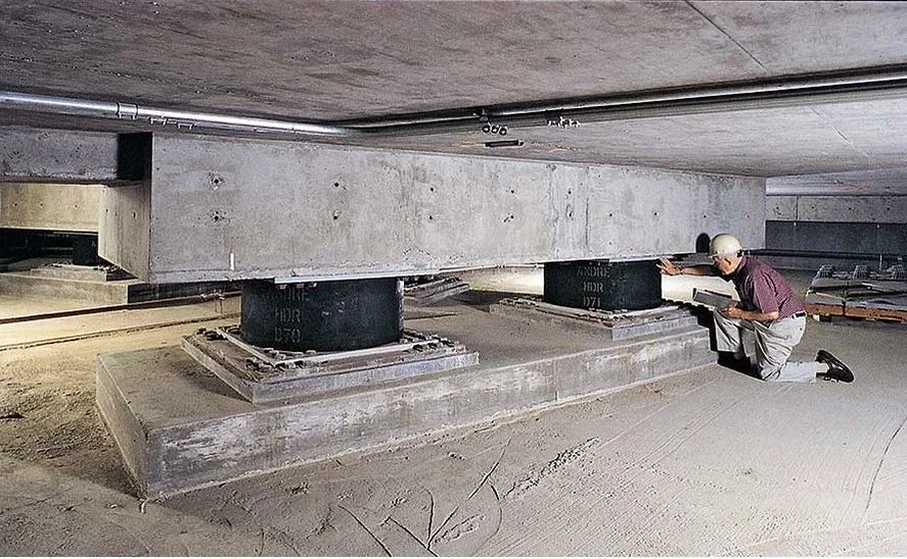
The ground beneath Stoke-on-Trent tells a complicated story. Coal mining shaped this city for over two centuries, leaving a legacy of backfilled shafts and variable drift deposits that demand careful structural isolation strategies. In our experience across the Potteries, even modest UK seismic events can trigger differential settlement when a building's foundation isn't decoupled from unstable ground. Base isolation seismic design shifts the engineering approach from resisting earthquake forces to accommodating ground movement through flexible bearings at foundation level. We see this as especially relevant for heritage-sensitive projects in Hanley and Burslem, where the architectural fabric must be preserved alongside modern safety standards. The drift geology here—glacial till over Coal Measures—creates impedance contrasts that a proper seismic microzonation study helps characterise before isolation parameters are set. Stoke's annual rainfall of around 800 mm also keeps near-surface clays in a permanently moist state, influencing isolator long-term performance.
Decoupling a Stoke-on-Trent structure from mine-worked ground requires isolator displacement capacity verified against both seismic demand and long-term mining subsidence.