GEOTECHNICAL ENGINEERING
STOKE-ON-TRENT
HomeInvestigation

Investigation in Stoke-on-Trent

Practical geotechnics, field-tested.

LEARN MORE

Ground investigation in Stoke-on-Trent must address the complex legacy of the North Staffordshire Coalfield, where shallow mine workings, made ground, and variable glacial till overlying Coal Measures strata demand rigorous assessment. Our approach integrates in-situ testing with desk study data to characterise these conditions in line with BS 5930 and Eurocode 7. For projects requiring continuous profiling of soil behaviour, we deploy CPT testing to map soft alluvium and identify potential collapse features, providing reliable parameters for foundation design without the disturbance of traditional boring.

This investigative category supports residential developments on former industrial land, infrastructure upgrades along the Trent Valley corridors, and commercial builds where ground stabilisation is critical. The data gathered directly informs cone penetration test interpretation and underpins accurate modelling for retaining structures and piled solutions, ensuring compliance with local authority planning conditions tied to the Coal Authority’s development risk framework.

Available services

CPT (Cone Penetration Test)

→ Ver detalle

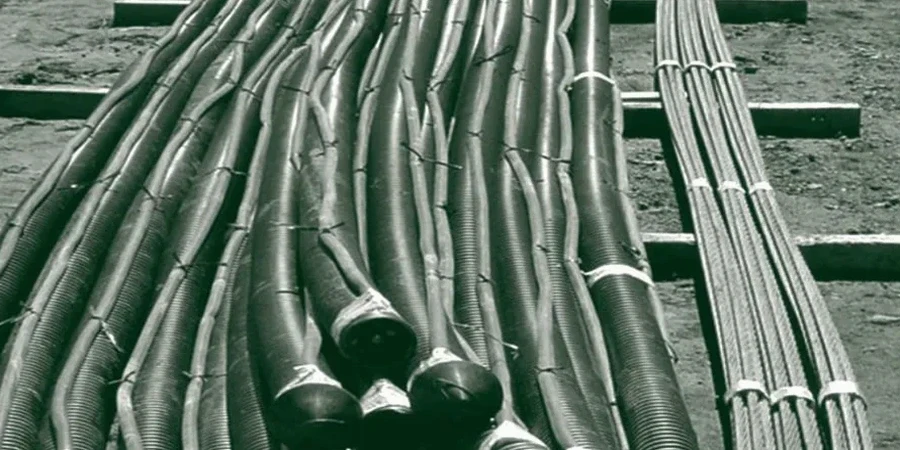
The first thing that arrives on site for an anchor installation in Stoke-on-Trent is a compact but powerful hydraulic rotary-percussive rig, often mounted on tracks to handle the sloping, post-industrial terrain common across the six towns. The rig positions itself over the marked borehole location, and the driller starts advancing the casing through the upper layers of made ground and glacial till that blanket much of the city, before reaching the competent Coal Measures bedrock. It is a methodical process of flushing, drilling, and monitoring the return water for signs of voids or old mine workings, which can appear without warning in this part of North Staffordshire. Once the design depth is reached, the tendon is inserted and the grouting begins, creating a bond that will either actively tension the structure or passively reinforce the ground mass, depending on what the geotechnical model demands.

A ground anchor in Stoke-on-Trent must be designed as much for what you cannot see, the old shafts and variable fill, as for the loads you can calculate.
Our service areas

Methodology and scope

In Stoke-on-Trent, we often see anchor designs that look straightforward on paper become significantly more complex once the borehole encounters the real stratigraphy, because the city sits on a patchwork of Middle and Upper Coal Measures interspersed with areas of thick glacial till and extensive historical fill from the pottery and mining industries. The design of an active anchor for a contiguous piled wall in Hanley, for instance, must account for the presence of sandstone bands that can deflect the borehole alignment, while a passive anchor system in a cut slope near Longton might need to be lengthened to bypass a lens of soft, saturated clay within the till. Our approach integrates the findings from site investigation boreholes to calibrate the bond length and confirm that the grout-to-ground interface will develop the required capacity without excessive creep under sustained load. We reference BS 8081:2015 and the relevant sections of Eurocode 7 for all design checks, and we specify sacrificial steel losses where the ground chemistry shows elevated sulfates, a legacy of the local geology.
Active and Passive Anchor Design for the Ground Conditions of Stoke-on-Trent
Technical reference — Stoke-on-Trent

Local geotechnical context

The most common mistake we see contractors make in Stoke-on-Trent is treating the entire site as if it were homogeneous ground, when in fact the boundary between the glacial till and the underlying Coal Measures is often undulating and can hide pockets of soft clay or water-bearing gravel. If the anchor bond zone is placed too close to this interface without proper investigation, the grout can fracture into the weaker material during stressing, leading to a sudden loss of load and a failed anchor. On several projects near the Caldon Canal corridor, we have had to redesign anchor fields mid-construction because the exploratory holes revealed a deeper-than-expected bedrock profile with open joints that consumed grout at an alarming rate. Skipping a thorough anchor design review in this city can mean the difference between a retaining wall that holds for decades and one that requires expensive remedial work before the project is even signed off.

Need a geotechnical assessment?

Reply within 24h.

Email: contact@geotechnical-engineering.biz

Video resource

Reference standards

BS 8081:2015 — Code of practice for grouted anchors, BS EN 1997-1:2004 (Eurocode 7) — Geotechnical design, BS 5930:2015 — Code of practice for ground investigations, BS EN 1537:2013 — Execution of special geotechnical work: Ground anchors

Technical data

ParameterTypical value
Design standard adoptedBS 8081:2015 + BS EN 1997-1:2004
Typical bond length in Coal Measures3.0 to 8.0 m depending on tendon type
Active anchor prestress range100 to 600 kN for retaining walls
Passive anchor bar diameter25 to 40 mm (high-yield steel)
Minimum free length4.5 m or as per slip surface analysis
Acceptance test criteriaBS 8081 creep and lift-off test
Corrosion protection gradeClass I or II depending on service life

Frequently asked questions

What is the difference between an active and a passive ground anchor?

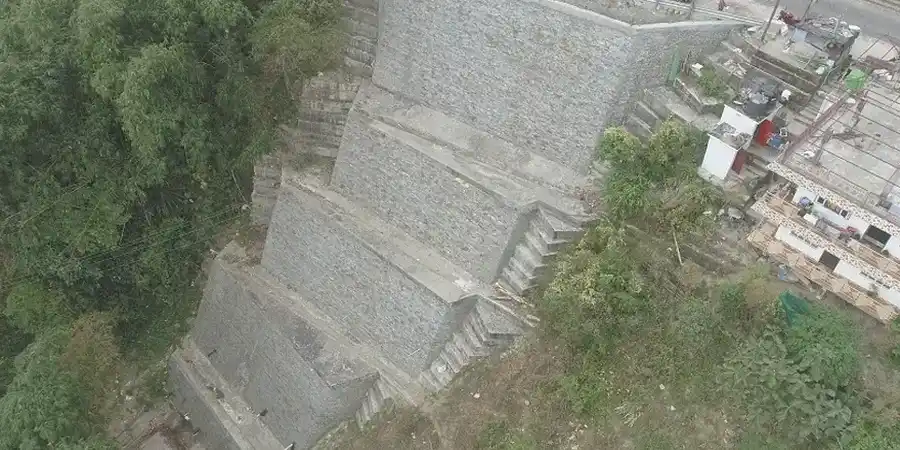
An active anchor is tensioned against the structure immediately after installation, applying a known prestress force that actively restrains movement. A passive anchor is not prestressed; it only mobilises its resisting force when the ground or structure begins to move, effectively reinforcing the soil mass. In Stoke-on-Trent, active anchors are typical for sheet pile and diaphragm walls along cuttings, while passive anchors are often used for slope stabilisation in the city's steeper valley sides.

How do old mine workings affect anchor design in Stoke-on-Trent?

The extensive historical coal and clay mining beneath the six towns means that any anchor design must consider the risk of intersecting uncharted shafts or galleries. We specify probing ahead of the borehole in high-risk zones and often extend the casing deeper to seal off the mine void before grouting the bond length. The grout mix is designed to limit loss into open joints, and we may use tube-à-manchette techniques to achieve a reliable seal where the ground is heavily fractured.

What kind of corrosion protection is needed for anchors in the local ground?

The Coal Measures and the overlying glacial till in Stoke-on-Trent can contain sulfates and acidic groundwater from old industrial processes. Depending on the aggressivity assessed during the desk study and ground investigation, we specify either Class I double-corrosion protection for permanent anchors in aggressive environments, or Class II protection for temporary works in less severe conditions, following the guidance of BS 8081:2015.

How much does an anchor design package typically cost?

A full anchor design package for a retaining wall or slope in Stoke-on-Trent, including the interpretative ground model, bond length calculations, corrosion protection specification, and the testing schedule, typically falls in the range of £920 to £3,240 depending on the number of anchor rows and the complexity of the ground conditions.

What testing is required once the anchors are installed?

We follow BS 8081 and specify three types of tests: suitability tests on trial anchors to confirm the design assumptions, acceptance tests on a proportion of the production anchors to verify performance, and routine lift-off checks during the service life for critical permanent anchors. In Stoke-on-Trent, we often recommend a higher percentage of acceptance tests where ground conditions are highly variable across the site.

Location and service area

We serve projects across Stoke-on-Trent and its metropolitan area. More info.

View larger map